Two cooktops, one pan, very different results. Gas has been the default in Western kitchens for the better part of a century. Induction is the newer arrival that keeps turning up in design spreads and appliance showrooms. Both can boil water and sear a steak, so the choice rarely comes down to whether they work. It comes down to how you cook, what your kitchen already has, and where you'd rather spend money.
How Each One Gets Heat Into the Pan
A gas burner works in the open air. The flame heats the grate and the base of the pan, and a meaningful share of that heat escapes up the sides and into the room instead of into your dinner. You feel it on a cold morning, and you really feel it in a small kitchen in August.
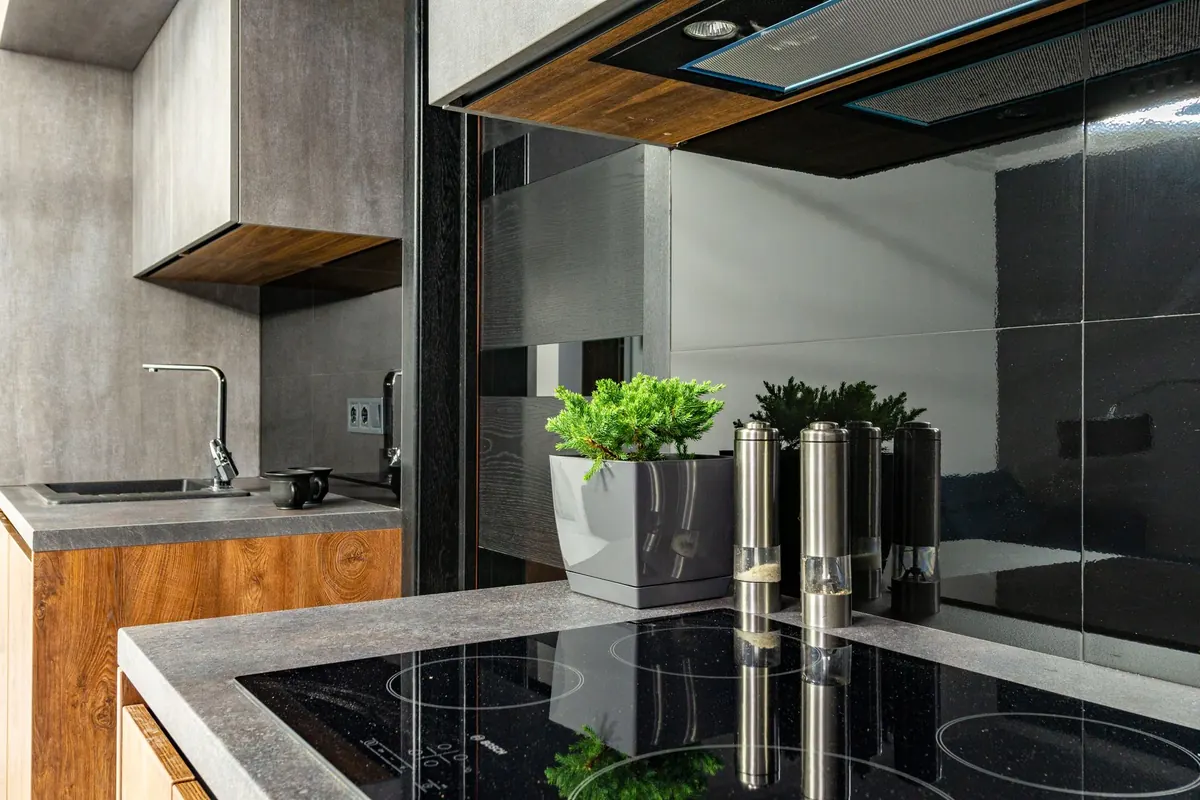
Induction works differently. Under that smooth ceramic glass sits a coil of copper. Run current through it and the coil creates a magnetic field. Set a pan with a magnetic base on top and the field induces currents inside the base itself — the pan becomes the heating element. The glass is mostly a bystander, which is why the surface stays far cooler than a gas grate.
That difference has one immediate practical consequence: induction only works with the right cookware. Test your pans with a fridge magnet before you shop.
- Works: cast iron, most carbon steel, enameled cast iron, and stainless steel labeled induction-ready or magnetic.
- Doesn't work: aluminum, copper, most glass and ceramic vessels, and non-magnetic stainless.
- Sometimes works: older stainless with a thick clad base — the magnet test settles it in seconds.
Cooking Performance: Where the Differences Show Up
Responsiveness and control
Induction changes temperature faster than anything else in a home kitchen. Turn the dial down and the pan reacts within seconds, which is good news for melting chocolate, holding a bare simmer, or pulling a sauce back from the edge. Gas is quicker than a radiant electric element but slower than induction. It has one quiet advantage: you can see the flame. Plenty of cooks read the height and color of that flame the way they read a speedometer, and they trust it more than a number on a panel.
Searing and high heat
Both do this well, with different mechanics. A gas flame licks up the sides of a pan, which helps when you're charring peppers directly over the burner or tossing a stir-fry. Induction pushes energy straight into the base, so you get a ferociously hot pan bottom and cooler walls. A heavy cast iron or carbon steel pan on a powerful induction zone will out-sear most residential gas burners and heat far more evenly. The catch is thin, inexpensive pans, which can warp or confuse the element's sensors.
Low, slow heat
Gas takes this one for many cooks. The gentlest burner can hold a bare simmer, and sliding the pan half off the grate gives you even less heat. Induction can simmer steadily too, but the lowest settings on some models cycle on and off, and the very lowest wattages get fussy. If you make stocks, rice, or custard regularly, test the low end of any induction model before you commit.
Safety, Air, and Small Hands
Neither appliance is dangerous when it's used properly. They pose different risks, though, and it's worth naming them plainly.
- Open flame. Gas burners ignite nearby towels, packaging, and loose sleeves. Knobs on the front of a range are also at exactly the height a curious toddler can reach.
- Residual heat. Induction glass stays cooler, but the pan and the hot circle beneath it do not. Many models show a residual heat indicator; treat it seriously.
- Combustion byproducts. Gas burners release nitrogen dioxide, carbon monoxide, and moisture into the air. A hood vented outdoors is genuinely worth having. Recirculating filters catch grease and odors but not gases. If anyone in the household has asthma or another respiratory condition, or the kitchen is small and poorly ventilated, talk to a qualified professional about your setup.
- Automatic shut-off. Induction elements detect a missing pan and switch off, and most have timers and child locks. Gas has no equivalent.
Installation and the Kitchen You Already Have
What's under the counter often decides the question before performance enters the room.
- Gas supply. You need an existing line, or a licensed gas fitter to run one. Many areas require a permit and an inspection.
- Electrical supply. Most induction cooktops need a dedicated high-voltage circuit — typically 240V in North America and 230V in the UK and Europe — sized for the appliance. That means a qualified electrician and possibly a new run from the panel.
- Ventilation. Plan a hood for gas. Induction benefits from one too, since frying throws grease into the air either way.
- Clearances. Check cutout dimensions, cabinet depth, and whether drawers below can still open without hitting the housing.
If your kitchen already has a gas line and no spare circuit, installing gas is usually the simpler job. If the wiring is there and the gas line isn't, the reverse is true.
What It Costs to Run
Induction delivers most of its energy into the pan; gas loses a noticeable share around the sides and up toward the hood. Per hour of cooking, that efficiency advantage generally favours induction. But the price of electricity versus gas swings enormously by region, and rate plans, time-of-use pricing, and rooftop solar all shift the math. Two households with identical cooktops can end up with opposite conclusions.
Compare your own utility rates rather than relying on a general rule, and factor in the one-time costs: a new circuit, a gas line, a hood upgrade, or a set of induction-ready pans. For a decision that affects your bills long term, your utility or a qualified energy advisor can help you run the numbers for your address.
Cleaning, Noise, and Daily Annoyances
Induction wins the cleaning contest outright. A flat glass surface wipes down in seconds, and spills don't bake onto grates. Do wipe up sugary or salty spills promptly, since both can etch the glass if left to sit. You'll hear the internal cooling fan while the element works, and a few pans buzz faintly on high settings.
Gas asks more of you. Grates, burner caps, and the wells beneath them collect grease and crumbs, and a boil-over means taking the top apart. In exchange, the flame responds to your hand rather than a sensor, and cookware is never an issue. Gas also has a stubborn advantage during a power outage — many cooktops can be lit by hand, though some newer models with safety valves won't. Check your manual and keep a long lighter in a drawer either way.
How to Decide
Write down the five dishes you cook most often. If that list is stir-fries, charred vegetables, and anything you finish over a live flame, gas will feel natural. If it's sauces, grains, braises, and eggs, and you'd rather spend your evenings wiping a cloth across the cooktop than scrubbing burner wells, induction is the better fit.
One more option worth knowing: dual-fuel ranges pair a gas cooktop with an electric oven, which lets you keep the flame up top and get the even baking of electric below.
And if you're still torn, buy an inexpensive portable induction hob and cook your normal week on it before you remodel anything. It sits on the counter, plugs into a standard outlet, and tells you more in seven days than a showroom ever will. The answer usually shows up by Thursday.
Photo: Max Vakhtbovych / Pexels