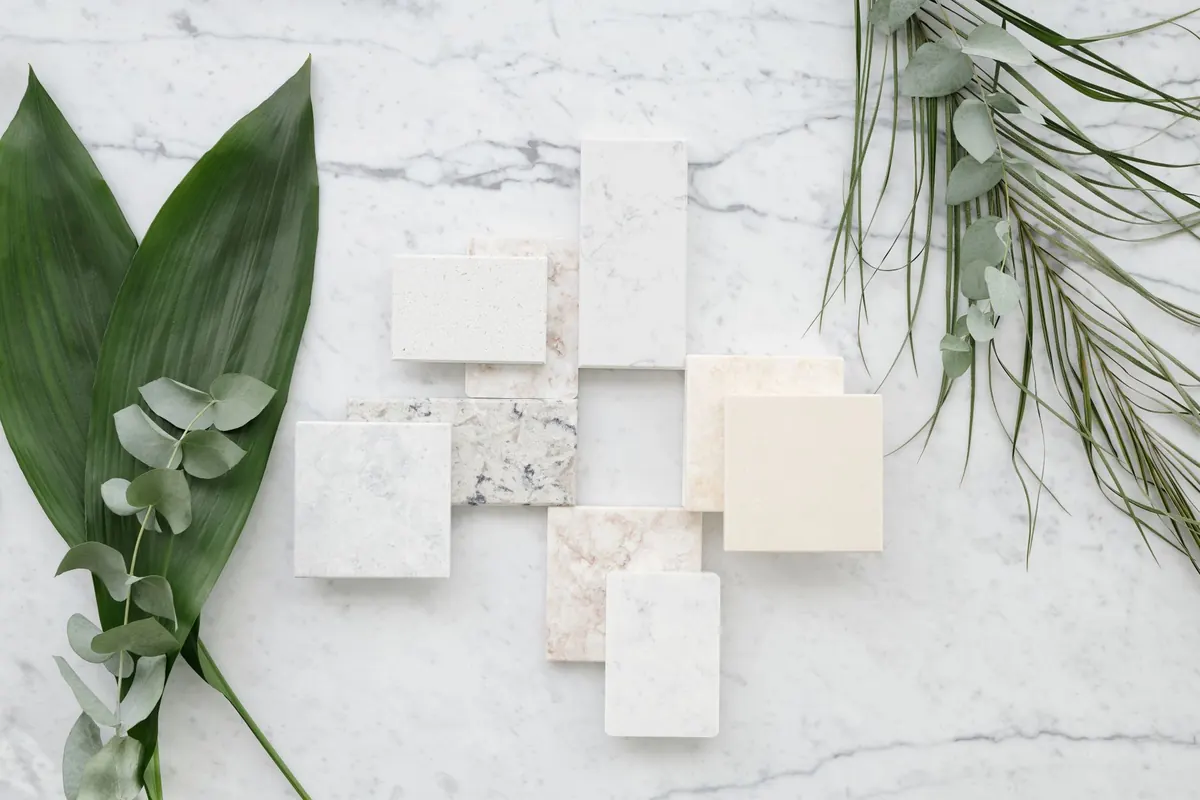
Stand in a stone yard for an hour and you'll notice the split. Granite slabs get admired like paintings — each one different, some dramatic enough to plan a whole kitchen around. Quartz samples get handled like appliances: picked up, flipped over, compared on a clipboard. That reaction says a lot about the two materials. Both will outlast your cabinets. The real decision comes down to heat tolerance, how much upkeep you'll honestly do, the look you want, and what your fabricator charges for the finished job.
How Each Surface Is Made
Granite is natural stone, quarried in blocks and sliced into slabs. Its crystals formed over millions of years, which is why no two slabs match — even two slabs from the same bundle can differ in veining and background color. Granite is porous, so it takes a sealer to keep oils and wine from soaking in.
Quartz — often labeled engineered stone — is roughly nine-tenths ground quartz mixed with resin and pigment, then pressed and cured into slabs. Because it's made in a factory, the pattern is controlled and repeatable. It's essentially non-porous, so it doesn't need sealing. The trade-off is that resin: it reacts to heat and can dull over years of strong direct sunlight, which is why most makers steer you away from full-sun outdoor use.
Durability: Where Each One Wins
Granite takes heat better than anything else in this price class. Set a screaming-hot cast iron skillet on it and nothing happens, though a sudden extreme temperature swing can still crack any stone. Quartz will scorch or discolor under that same pan; the resin can haze permanently. Use a trivet on quartz, every time.
Both resist scratches from normal kitchen life, but neither is a cutting board. Keep a board out and you'll avoid the fine gray scratch marks that show up on dark surfaces. Granite is harder and more brittle, quartz slightly more forgiving, yet chips happen to both — usually at a sink cutout or a countertop edge, courtesy of a dropped mixing bowl or a cast iron pan.
One detail worth raising with your fabricator: any countertop needs proper support over a dishwasher opening or a long unsupported overhang. Ask how they'll brace it, especially for a bar-height island.
Maintenance and Everyday Care
Quartz is the low-effort option. Granite asks a little more, but far less than most people fear.
- Quartz: wipe with warm water and a drop of mild dish soap. Skip abrasive powders, steel wool, and harsh bathroom-style cleaners — they can dull the finish.
- Granite: the same daily routine, plus resealing. Depending on the stone and the sealer, that's usually once a year or so.
- Sealer test: drip a little water on the granite. If it beads up, you're fine. If it darkens the stone or soaks in within a few minutes, it's time to reseal.
- Both: blot spills rather than wiping them around, and rinse acidic cleaners off promptly instead of letting them sit.
Stains on granite are rare but not impossible — oil and wine are the usual suspects, and a poultice can often lift them. Quartz stains are rarer still, though a scorch mark is permanent. If you're weighing any material against a health or air-quality concern, talk to a qualified professional rather than a showroom salesperson.
Appearance: Uniform or One-of-a-Kind
Quartz gives you control. Slabs are consistent, so a ten-foot island reads as one calm surface, and book-matched veining can be planned rather than hoped for. The catch: engineered patterns repeat, and on a very large kitchen you may start spotting the same swirl twice. Choose a subtle pattern if that would bother you.
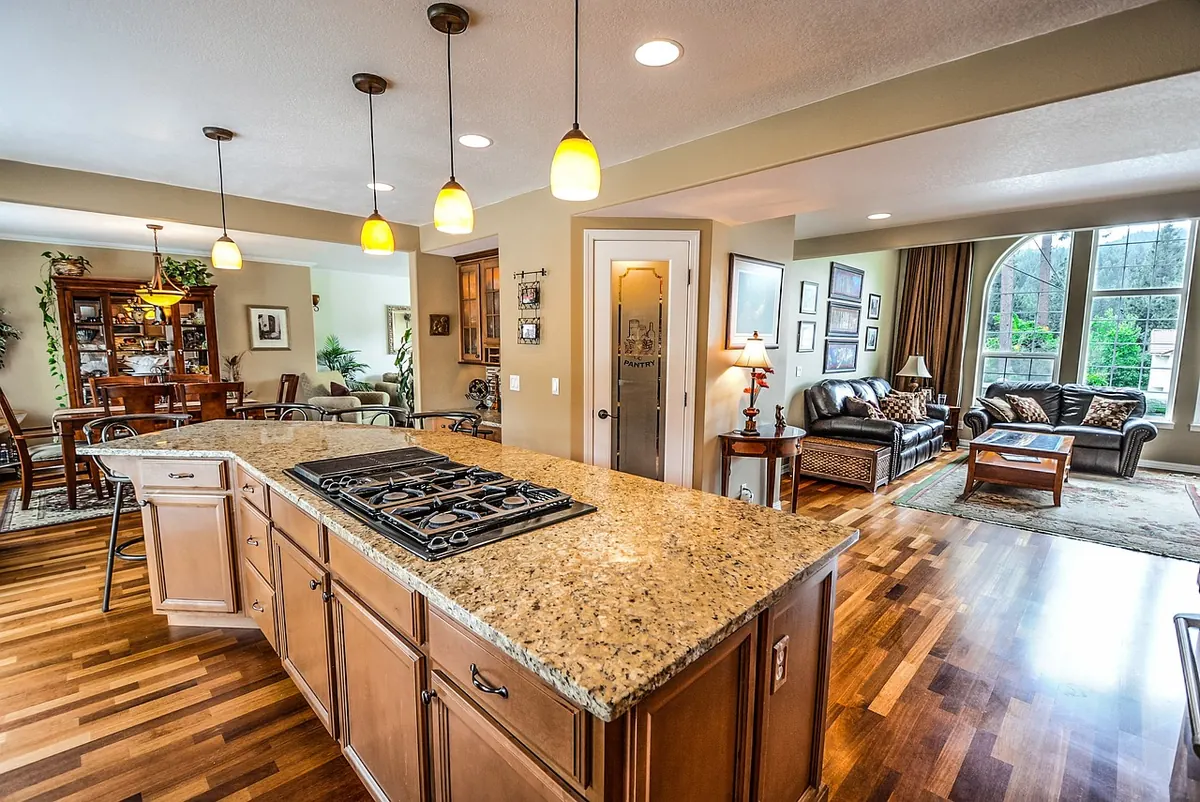
Granite gives you something no factory can reproduce. That's the appeal and the risk. Sample chips lie — the actual slab is the only thing that counts. Pick your slab in person, photograph it, and ask the fabricator to lay out your template so the strongest movement lands where you'll see it, not behind the sink or sliced off at a seam.
Cost: Compare Installed Quotes, Not Slab Prices
Quartz tends to cost more upfront than a common granite, but the gap narrows fast once you start comparing specific colors. Granite pricing swings widely with rarity and quarry availability, so a basic gray can undercut mid-range quartz while an exotic slab with wild movement can cost several times more.
The slab is only part of the invoice. Fabrication, edge profile, sink and faucet cutouts, backsplash, removal of the old counter, and haul-away all land on the same quote — and those line items vary more between fabricators than the stone does. Get at least three itemized quotes that show material, fabrication, edge, cutouts, installation and demolition separately. Ask what happens to leftover material, what voids the warranty (heat damage and DIY repairs usually do), and how long the warranty runs; many quartz brands back their product for a decade or more.
Matching the Countertop to Your Kitchen
Answer these honestly and the choice usually makes itself:
- Do you set hot pans down without thinking? Granite.
- Do you want every seam and edge to look identical? Quartz.
- Will the counters sit in strong direct sun all day? Lean granite, or pick a lighter quartz and add a window treatment.
- Is a fifteen-minute cleanup your idea of a good evening? Quartz.
- Do you want a slab nobody else on your street has? Granite.
- Are you working to a tight budget? Quote both in the exact colors you like, then decide — not the other way around.
If your answer lands on granite, spend the extra visit to pick your slab. If it lands on quartz, spend it choosing a pattern you can live with at close range, since you'll be looking at it every morning from two feet away. Either surface, installed well, will serve you for decades. The boring truth is that fabrication quality matters more than the name on the sample — so ask for references, check the installer's insurance, and get everything in writing before the template is taken.
Photo: Edward Jenner / Pexels